FREE SHIPPING on all orders above Rs. 4,500



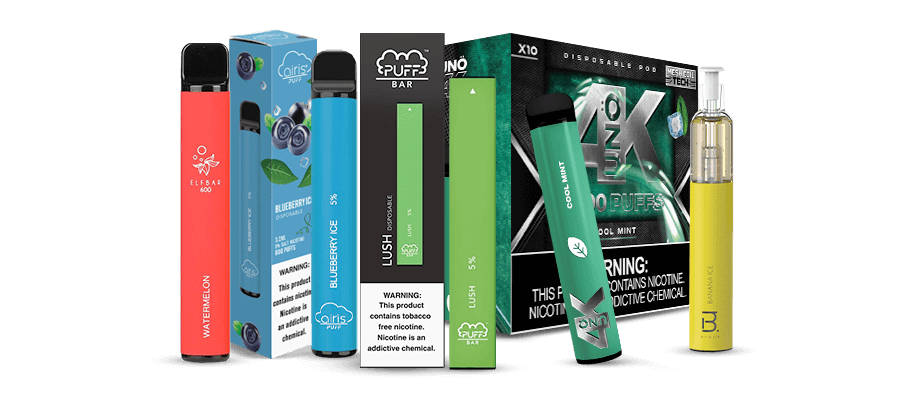
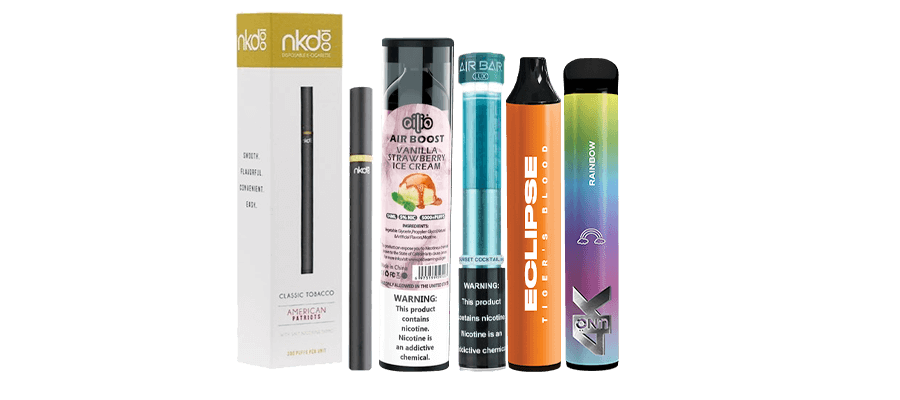
To change vape flavor, swap the pod or tank to a different e-liquid, since flavor is set by the juice, not the device. On refillable devices, rinse or replace the coil first — flavor carryover from the previous e-liquid is the most common cause of “mixed” taste when switching.
Choosing a vape flavor comes down to matching nicotine strength, base type (fruit, menthol, dessert, tobacco), and VG/PG ratio to personal taste and throat-hit preference. Beginners often start with fruit or menthol blends since they’re less overwhelming than dessert or tobacco profiles.
To get more flavor, use a fresh coil, keep the wick fully saturated, lower the wattage slightly to avoid burning the coil, and store e-liquid away from heat and light. A clean tank and correct airflow setting also make a noticeable difference.
Sugary vape flavors refer to e-liquids modeled on sweets, desserts, candy, or soda — like cotton candy, custard, or cola. These are distinct from “sweetener content,” since most e-liquids don’t contain actual sugar; the sweetness is flavor-only.
Vape e-liquids commonly use fruit, menthol/mint, tobacco, dessert, beverage, and candy flavor categories, built from food-grade flavor concentrates mixed into a PG/VG base. Manufacturers blend these into hundreds of sub-variations (e.g., mango-menthol, vanilla custard)
Vapor volume is driven mainly by VG ratio and device wattage, not flavor itself — high-VG (70%+) e-liquids produce denser clouds regardless of flavor. Menthol and fruit flavors are often paired with high-VG mixes, but the flavor itself isn’t the vapor driver.
Kanthal and Nichrome wire are generally favored for flavor clarity at lower wattages, while mesh coils are favored for flavor at higher wattage/sub-ohm builds. Wire choice affects heat distribution and ramp-up speed, which changes how flavor is perceived.
There’s no single “best” flavor — preference is subjective and varies by device type, VG/PG ratio, and personal taste. Fruit and menthol blends are consistently the best-selling categories across most markets.
Popular flavor categories consistently include mango, strawberry-kiwi, watermelon, blue raspberry, mint/menthol, tobacco, vanilla custard, cola, grape, and mixed berry. Exact rankings vary by brand, region, and market survey.
There’s no medically established “safe” puff count — risk depends on nicotine concentration per puff, device type, and individual factors like age and health history. Public health bodies (e.g., CDC, NHS) note that any regular nicotine vaping carries dependency risk, and users concerned about their usage should speak with a healthcare provider.
This claim is not scientifically standardized — puff-to-cigarette comparisons vary hugely by device, e-liquid nicotine strength, and puff duration, so no fixed ratio applies universally. Some disposable vapes are marketed as “equivalent” to a pack of cigarettes based on total nicotine content, but this isn’t a precise health comparison.
No amount of nicotine vaping has been established as risk-free; “safe” isn’t a term health authorities apply to any level of vaping. Ten puffs a day is low relative to regular users, but nicotine dependency can develop at low, consistent exposure too.
No — a single puff and a single cigarette aren’t directly equivalent, since cigarettes deliver nicotine differently and puff-count comparisons vary by device and e-liquid strength. Marketing claims using this comparison are simplifications, not clinical measurements.
Twenty puffs a day is on the lower end compared to average daily use among regular vapers, but “a lot” depends on nicotine strength per puff and individual tolerance. There’s no official daily-puff benchmark from health authorities.
No, this is a common misreading of disposable vape marketing, which often states a device’s total puff count is equivalent to a pack of cigarettes’ total nicotine — not that one single puff equals 20 cigarettes.
Beginner-friendly options are typically closed-pod systems, since they require no coil-building, refilling, or wattage adjustment — just insert a pre-filled pod. Refillable pod systems are a step up for users who want flavor variety without full mod complexity.
Device lifespan varies by type: disposables typically last 300–600 puffs (roughly 1–3 days for average users), pods/coils last 1–2 weeks before flavor degrades, and reusable mod batteries can last 1–3 years with proper care.
A vape pod is a small, often disposable or refillable cartridge that holds e-liquid and houses the coil, designed to click into a pod-system device. Pods are the core component that generates vapor when the device is activated.
Public health bodies in several countries (e.g., UK’s NHS) consider vaping substantially less harmful than smoking combustible cigarettes, since it avoids tar and combustion byproducts — but “less harmful” isn’t the same as “safe,” and both still carry nicotine-dependency risk. This is a comparative harm-reduction stance, not a clean-bill-of-health claim.
“Vape” is the general term for any e-cigarette device, while a “pod” is one specific format — a compact, cartridge-based system within the broader vape category. Other formats include vape pens, box mods, and disposables.
This isn’t a true either/or, since pods are a type of vape — the real comparison is pod systems vs. mod/tank systems. Pods win on simplicity and portability; mods/tanks win on flavor customization and cost-per-use over time.
No vaping product, pod-based or otherwise, is classified as “safe” by health authorities — pod vapes are generally considered lower-risk than smoking but still deliver nicotine and produce inhaled aerosol with unresolved long-term health data.
A standard pod (around 1–2ml capacity) typically delivers roughly 150–300 puffs, depending on pod size, coil resistance, and puff duration. Manufacturer specs vary, so checking the specific product listing gives the most accurate count.
No, the pod itself is not the battery — the pod holds e-liquid and the coil, while the battery is housed in the separate device body the pod connects to. Some all-in-one disposables integrate both into a single unit.
A single pod generally lasts several days to about a week for an average user before flavor fades or the coil burns out, while the reusable device body can last 6 months to 2+ years depending on battery care.
To use a vape: charge the device, insert or fill the pod/tank with e-liquid, prime the coil if refillable, then inhale through the mouthpiece — either drawing directly or pressing a fire button, depending on the model. Always follow the specific manufacturer’s setup instructions.
Wipe the exterior and contacts with a dry or slightly damp cloth, remove and clean the tank/pod separately with warm water (letting it fully dry before refilling), and never submerge the battery unit. Replace the coil regularly rather than trying to fully “clean” it back to new condition.
Check that the pod is properly seated and the contacts are clean, confirm the device is charged, check for a clogged airflow vent, and try priming or replacing the coil if it’s saturated or burnt. If it’s a disposable with no fixable parts, a dead battery or empty pod usually means replacement.
Rinsing a coil with water can sometimes revive flavor by removing residue, but it must be fully air-dried for 24–48 hours before reuse, since trapped moisture can cause shorting or a burnt taste. Many users find replacement more reliable than washing, since coils have a limited lifespan regardless.
To empty a refillable pod, remove it from the device, open the fill port or seal, and pour out the remaining e-liquid over a sink or paper towel — some pods also have a base plug that can be removed for full drainage. Dispose of leftover e-liquid and empty pods according to local e-waste/battery disposal rules, not household trash.