

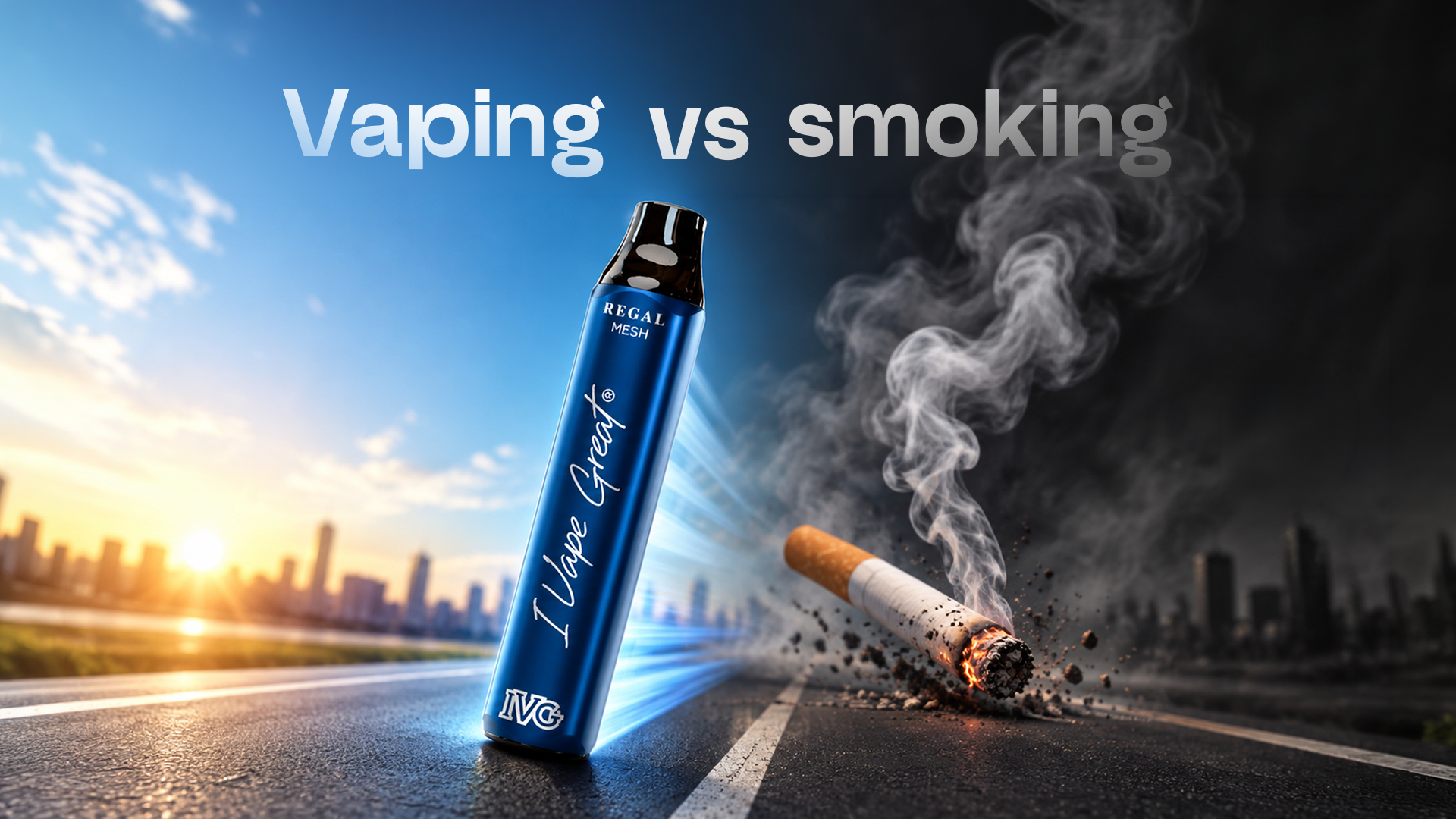
Vaping vs smoking is one of the most searched comparisons today, and for good reason: millions of smokers are exploring alternatives, while millions more are simply curious about how the two actually compare. Both involve inhaling nicotine, but the way each product works, and what that means for your body, is quite different.
If you’ve ever typed “vaping vs smoking” into Google wondering whether switching is actually worth it, you’re not alone. Millions of smokers ask the same question every year, and the honest answer is more nuanced than a simple yes or no.
Vaping vs Smoking: Quick Comparison
Before diving into the details, here’s a snapshot of how vaping vs smoking stacks up across the categories people care about most:
| Factor | Smoking | Vaping |
| Combustion | Yes (burns tobacco) | No (heats e-liquid) |
| Chemical exposure | 7,000+ chemicals, ~70 carcinogens | Far fewer chemicals overall |
| Tar exposure | High | None |
| Nicotine delivery | Yes | Yes (adjustable strength) |
| Smell/residue | Strong, lingering | Minimal |
| Relative harm (per major health bodies) | Higher | Lower, but not zero |
How Smoking Works
Traditional cigarettes work through combustion: burning tobacco leaves produces smoke that’s inhaled directly into the lungs. This burning process is central to most conversations around vaping vs smoking, because combustion is what generates the bulk of harmful byproducts associated with traditional cigarettes, including tar and thousands of additional compounds. Smoking has been studied for decades, so we have an enormous body of long-term data on how it affects the body over a lifetime.
How Vaping Works
Vaping takes a completely different approach. Instead of burning anything, an e-cigarette or vape pen heats a liquid (commonly called e-liquid or vape juice) into an aerosol, which is then inhaled. Because there’s no combustion, many byproducts created by burning tobacco simply aren’t part of the vaping process. This is the core reason the vaping vs smoking discussion so often favours vaping when it comes to combustion-related harm specifically.
E-liquids typically contain propylene glycol and/or vegetable glycerin, nicotine (in adjustable concentrations), and flavouring. Because users can control nicotine strength from high-nicotine formulas down to zero-nicotine options, vaping offers a level of customisation that traditional cigarettes simply don’t.
Is 1 Puff of a Vape Equal to One Cigarette?
This question comes up constantly, and the honest answer is: it depends. There’s no universal 1:1 ratio between a single vape puff and a cigarette, because it comes down to several variables:
- Nicotine concentration in the e-liquid (measured in mg/mL)
- Puff duration and volume (a long, deep puff delivers more than a quick one)
- Device type (disposable vapes, pod systems, and mods all vaporise differently)
- Individual usage patterns
As a rough frame of reference, many vaping guides estimate that it can take anywhere from roughly 10 to 15 puffs of a standard vape to deliver a nicotine dose comparable to one traditional cigarette, but this figure shifts significantly depending on the device and e-liquid strength involved. Rather than fixating on an exact number, it’s more useful to think about nicotine intake in daily totals rather than a single puff-to-cigarette conversion. This is one of the more misunderstood parts of the vaping vs smoking conversation, and it’s worth approaching with realistic expectations rather than internet rules of thumb.
Nicotine and Habit Formation
Nicotine is the common thread between both products, and it’s naturally habit-forming regardless of delivery method. One advantage vaping offers in the vaping vs smoking comparison is flexibility: users can gradually step down nicotine concentration over time, something that’s much harder to do with standardised cigarette nicotine content. This step-down approach is part of why vaping is frequently discussed as a tool within smoking-cessation strategies.
Can Vaping Help You Quit Smoking?
For many long-term smokers, switching to vaping has been part of a successful transition away from cigarettes. Research has looked at daily e-cigarette use among smokers actively trying to quit, with meaningful numbers of participants successfully moving away from traditional cigarettes altogether. Some regulatory bodies, have authorised the marketing of specific e-cigarette products partly on the basis of their potential role in helping adult smokers quit.
If you’re weighing vaping vs smoking specifically as a cessation strategy, the general recommendation from health professionals is to use vaping as a deliberate step-down tool with the eventual goal of reducing nicotine dependence altogether, rather than switching indefinitely between the two.
Vaping vs Smoking: Cost Considerations
Beyond the health angle, cost is a practical part of the vaping vs smoking decision for a lot of people. While starter devices carry an upfront cost, many long-term vapers find that ongoing e-liquid expenses can work out to be more economical than a daily cigarette habit, especially in markets where cigarette taxes are high. Your actual savings will depend on your device, usage frequency, and local pricing.
What Long-Term Users Say
Beyond the clinical research, a lot of people considering vaping vs smoking want to hear from people who’ve actually made the switch. Common themes among long-term ex-smokers who transitioned to vaping include noticing improved stamina, less lingering odour on clothes and hands, and an easier time gradually reducing nicotine strength over months. Everyone’s experience is different, and results vary based on habits, device choice, and personal health background, but the switch experience is a useful data point alongside clinical research.
Frequently Asked Questions
Are vape pens healthier than smoking for someone who’s never smoked?
Health experts generally advise that people who don’t currently use nicotine products avoid starting either habit, since the comparison of vaping vs smoking is most relevant for existing smokers weighing their options.
Is 1 puff of a vape equal to one cigarette in terms of nicotine?
No, there’s no fixed ratio. It varies by device, e-liquid strength, and puffing style, though many estimates suggest it takes multiple puffs to approximate the nicotine of a single cigarette.
Does switching from smoking to vaping require quitting nicotine entirely?
Not necessarily at first. Many people use vaping as a gradual step-down tool, slowly reducing nicotine concentration over time.
Which is more cost-effective long-term?
For most regular users, vaping tends to be more cost-effective over time compared to a daily cigarette habit, though this depends on device choice and local pricing.
The Verdict
When it comes down to vaping vs smoking, the clearest takeaway from health authorities and researchers alike is this: for adult smokers, switching completely to vaping is generally considered the less harmful path forward, primarily because it removes combustion and tar from the equation. It’s not a magic solution, and it works best as a genuine step-down tool rather than a permanent replacement habit. If you’re currently a smoker exploring your options, visiting Artian Vapor Pakistan to understand the real differences between vaping and smoking, rather than relying on assumptions, is the best starting point for making a decision that fits your goals.